
In France, civil marriage remains the only form recognized by law, and preparing for it involves an administrative timeline that many couples discover only at the last minute.
Between the publication of the banns (a mandatory ten-day period after submitting the paperwork to the town hall), the limited validity of the birth certificate, and vendors sometimes being booked more than a year in advance, planning a wedding means juggling overlapping deadlines. Understanding these time constraints changes how you approach each step.
Civil marriage paperwork deadlines: what everything else depends on
The marriage application must be submitted to the town hall of a municipality with which one of the future spouses has a lasting connection (their home or residence). This may seem like a minor detail, but it determines which town hall is responsible—and therefore which ceremony dates are available.
Once the complete application has been submitted, the banns are posted for ten days before the ceremony can take place. This statutory period cannot be shortened. In practice, the town hall may take several weeks to approve the application before posting the banns, especially in large cities, where schedules are packed from May to September.
Another common pitfall: the validity of the birth certificate is assessed on the date the application is submitted, not the wedding date. Requesting it too early may mean it is no longer accepted when you put together your application. In practical terms, it’s best to check the submission schedule with the town hall before starting the civil-status paperwork.
For couples looking to plan all their preparations beyond the administrative side, the wedding planning page on Espace Mariage outlines the main stages to tackle alongside the official procedures.
Wedding budget: weigh up your options before booking
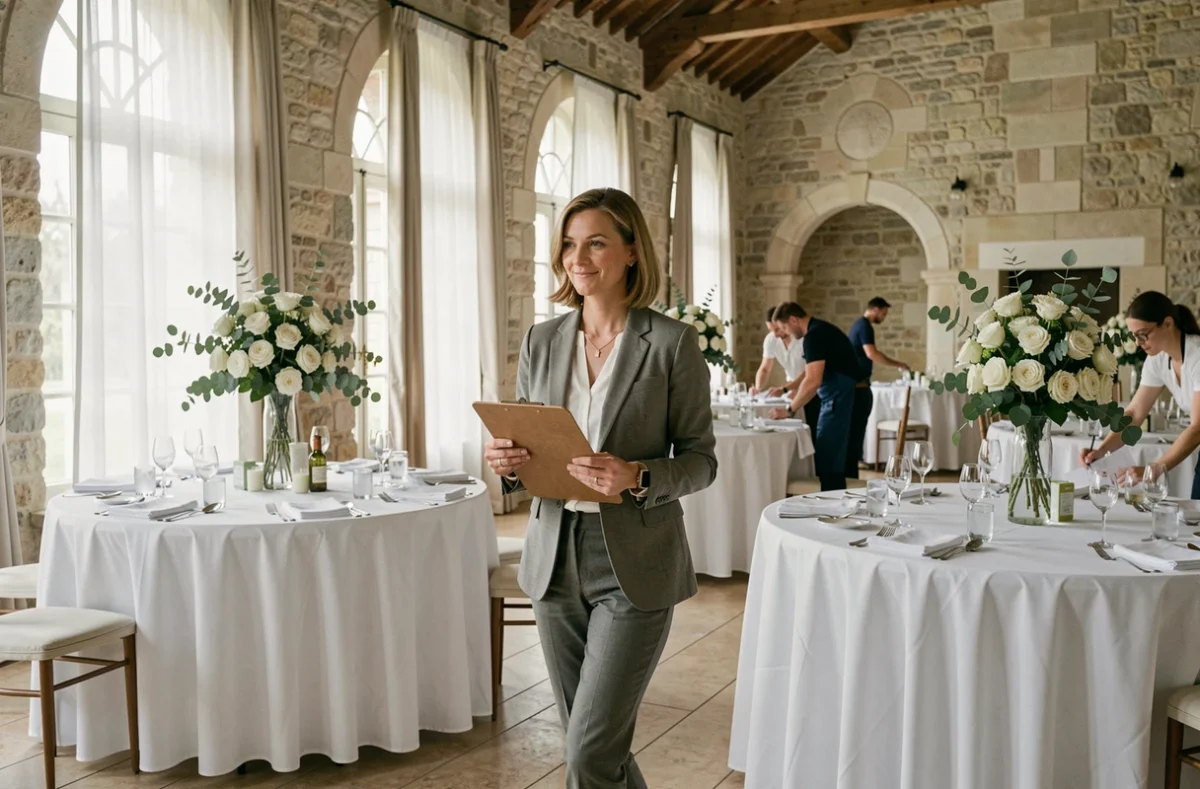
Online guides often recommend “setting a budget” as the first step. The problem is that most couples have no idea what a wedding really costs until they receive their first quotes. A budget isn’t set in the abstract; it takes shape around three concrete factors.
- The number of guests, which directly affects catering costs, venue size, and logistics (tables, tableware, and possibly accommodation). Increasing the guest list from 80 to 120 doesn’t just mean a 50% increase in cost; it often means moving up to a different category of venue and vendor.
- The season, since a Saturday in June or September costs significantly more than a Friday in October at the same venue. Off-season rates can vary by as much as twofold depending on the region.
- The reception format: a two-day wedding with brunch the next day means checking how long you can use the venue, whether accommodation is available on-site, and whether a second catering service is needed. These extra costs are rarely included in standard quotes.
The question isn’t “how much do we want to spend?” but which expense are we willing to cut back on to fund what matters most? A couple set on an exceptional venue may need to forgo a high-end photographer or shorten their guest list.
Venue and vendors: the timeline that matters
Booking the venue determines the date, which in turn determines vendor availability. This sequence is fixed. A couple who starts contacting caterers or photographers before securing the venue may have to start all over if their chosen venue is only available on a different date.
Venues are generally booked twelve months in advance for Saturdays during peak season (May to September). In some highly sought-after regions, this can stretch to eighteen months. Weekday and off-season dates offer more flexibility, sometimes allowing you to book as little as six months ahead.
Caterer, photographer, DJ: what to book first
Once the venue is confirmed, the caterer comes first. Their schedule is often just as tight as the venue’s, and the menu depends on the reception format (sit-down meal, cocktail reception, or buffet). The photographer and DJ are usually booked next, around six to eight months in advance.
Florists and decorators are less constrained by lead times and can be booked three to four months ahead. A wedding dress, on the other hand, often requires six to nine months from ordering to final alterations.
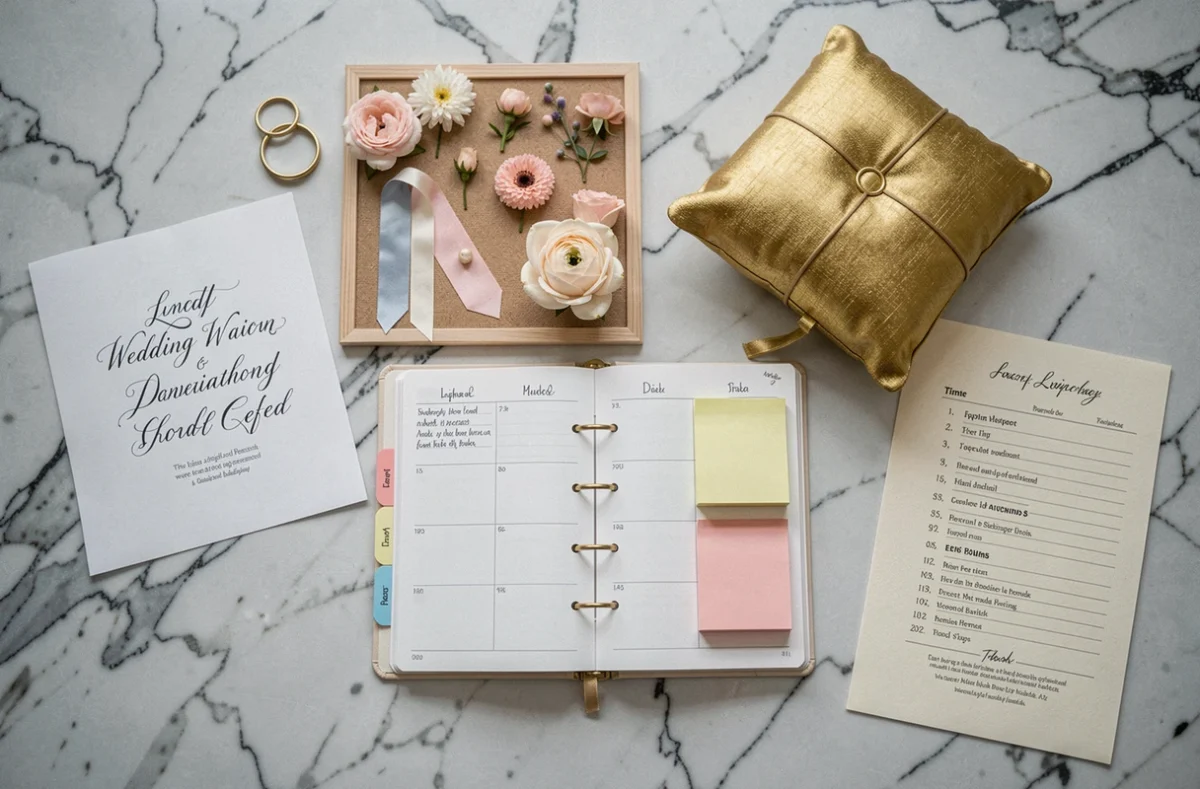
Humanist ceremonies and two-day weddings: often underestimated constraints
Humanist ceremonies are becoming increasingly popular with couples who want to personalize their vows outside a religious setting. They have no legal standing and do not replace the civil ceremony at the town hall. They still take time to plan, however: writing the ceremony, choosing an officiant, possibly rehearsing, and coordinating with the day’s schedule.
A two-day wedding adds logistical challenges that the venue may not always cover. Before booking, it’s worth checking several details:
- The actual hours of use (arriving the day before and leaving the following afternoon), since some venues charge for the extra day as a separate service
- Accommodation capacity on-site or nearby, especially if guests are travelling from far away
- Whether you can host brunch the next day with a second catering service, which may require a different caterer or involve a substantial surcharge
Confirming these details before signing the venue rental contract helps avoid budget surprises. A venue with an attractive advertised rate can become considerably more expensive once “second-day” options are added.
Planning a wedding is less about ticking off a list of steps than understanding how each decision affects the next. The venue determines the date, the date determines vendor availability, and the guest count determines the real budget. Mapping out these constraints first, rather than starting with decoration ideas, is still the most reliable way to avoid having to reorganize everything halfway through.