Traveling without knowing why is possible. You book a flight, pack a suitcase, and come back with photos. The trip was enjoyable, but something is missing. This sense of vagueness often stems from not setting an intention before you leave. Putting into words what you want from a trip, even in a simple sentence, changes how you choose a destination, spend your days there, and remember the experience months later.
Travel intentions and practical destination choices
A travel intention is not a performance goal. It’s not “visit twelve museums in four days.” It’s more like an inner compass that guides your practical decisions.
Here’s an example. You feel the need to slow down. Put that way, “slow down” is vague. Translated into concrete choices, it might mean taking the train instead of flying, choosing accommodation without a TV, or booking a week rather than five days.
An intention is most useful when translated into specific decisions: transport, trip length, season, and type of provider. An international survey published by Getty Images in February 2025 found a gap between the values travelers express and the criteria they actually prioritize when booking.
Sustainability, for example, matters to a minority when making the final choice, even though many respondents say they are willing to pay more for greener options. The aspiration is there, but it doesn’t always translate into action.
To avoid this gap, try writing three sentences before you search for a ticket. The first describes how you want to feel. The second, what you want to learn or discover. The third, what you’re willing to give up (comfort, speed, or the lowest price). These three sentences become a filter for every decision that follows.
Agencies specializing in intentional travel already operate in several regions. In the Basque Country, Basque Country Unpacked offers trips built around local culture, gastronomy, or nature, making it easier to align what you’re looking for with what you experience on the ground.

Travel off-season to give your itinerary more meaning
Have you ever noticed how some cities become unrecognizable in summer? Narrow streets turn into queues, prices soar, and local residents disappear behind tourist businesses.
Choosing when to travel is part of setting an intention. A Travel Weekly article reports that a significant share of tourist nights in the European Union falls in July and August, and that international visitors to Italy are concentrated in a very small part of the country. Traveling off-season eases pressure on overcrowded places and spreads the economic benefits to areas that need them.
Choosing when to go isn’t a sacrifice. It often makes for a richer experience. In the shoulder season, local markets return to their usual pace. Artisans have time to chat. Hiking trails grow quiet again. What you gain in having places to yourself, you also gain in the quality of your encounters.
Secondary destinations and a fresh perspective
A travel intention can also encourage you to explore secondary destinations. Instead of visiting a country’s capital for the third time, choosing a mid-sized city or rural region means planning your trip differently. You read more, look for local recommendations, and accept that you won’t have everything figured out in advance.
A less-documented place calls for more attention, and therefore more presence. That presence is precisely what gives a trip depth.

Mindfulness while traveling: slow down to notice more
The term “mindfulness” can feel intimidating. It brings to mind silent retreats or meditation poses. When traveling, the idea is simpler: do fewer things, but experience them fully.
In practice, this can take several forms:
- Walk around a neighborhood for an hour without a map or GPS, mentally noting the sounds, smells, and textures of the building facades.
- Eat a meal alone without your phone, observing how the food is prepared and the conversations around you.
- Spend half a day in one place (a park, a market, a café) instead of rushing between three tourist attractions.
Doing fewer activities makes each experience more meaningful. This goes against the idea that you have to “make the most of your trip,” but it creates clearer, more lasting memories.
A travel journal as a way to stay grounded
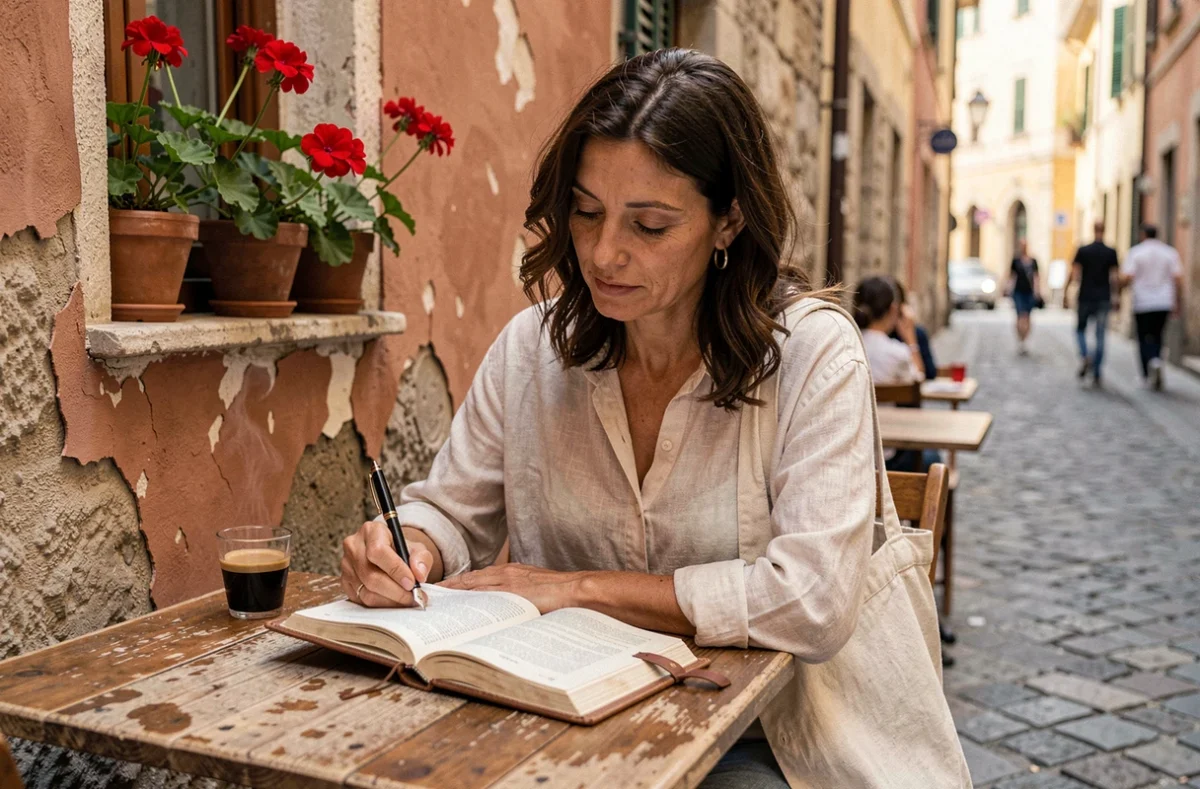
Writing a few lines each evening isn’t a literary exercise. The goal is to capture what you felt, not what you did. The difference is clear. “Visited the Bayonne market” doesn’t say much. “The smell of Espelette pepper brought back a childhood memory I thought I’d lost” anchors the trip in your inner life.
This kind of note-taking takes two minutes. It turns a journey into a personal experience.
Set your travel intention before you leave
An intention works best when it’s specific and positive. Here’s a three-step method:
- Identify something missing from or a need in your daily life right now (quiet, human connection, physical exertion, cultural discovery).
- Choose a destination and type of trip that meet that need, rather than one dictated by a deal or a trend.
- Write your intention down in a short sentence. For example: “I’m going to listen to a language I don’t understand and accept that I won’t grasp everything.”
A written intention guides your decisions throughout the trip. It gives you a point of reference when the urge to fill every hour takes over.

Adapt your intention to the length of your trip
A two-day weekend calls for a different intention than a three-week trip. For a short stay, it helps to focus your intention on a single theme: a neighborhood, a culinary topic, or a physical activity. On a longer trip, your intention can evolve along the way, as long as you take the time to put it into words again.
This process of adjustment doesn’t have to be rigid. It’s simply a matter of checking from time to time whether what you’re doing still matches what you were looking for when you set out.
After your trip: carry its meaning into everyday life
A trip’s meaning doesn’t end at the airport. What you learned about yourself during your stay can enrich your daily life, as long as you don’t let old habits take over right away.
Keeping up a practice you discovered while traveling helps the experience last. Did you walk every morning during your trip? Keep going, even if it’s just for fifteen minutes. Did you cook a local dish with a host? Make it again at home, even if it’s not quite the same.
Intentional travel doesn’t just create memories. It plants seeds of change. Some take root, others don’t. But those that do can permanently change how you relate to travel, free time, and curiosity. The next trip begins there, in the way you live your everyday life.