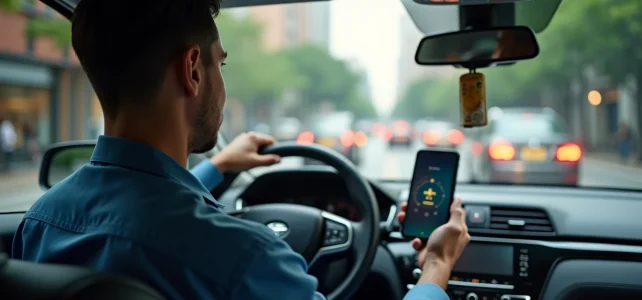
The VTC market is fragmenting along lines that the dominant platforms had not anticipated. Algorithmic pricing versus direct negotiation, digital payment versus cash, salaried drivers versus equipped independents: the gaps between models are widening and reshaping the balance of power. Measuring these divergences allows us to understand where the real room for maneuver lies for a VTC driver in 2026.
VTC Pricing Models: Algorithm vs. Direct Negotiation
Dynamic pricing, popularized by Uber and Bolt, adjusts the price of a ride in real-time according to supply and demand. The driver has no control over the amount displayed to the customer. This mechanism maximizes vehicle occupancy rates, but it generates an opacity that both passengers and drivers have contested for years.
Related reading : News and tips to support baby’s development and well-being
In 2025, a platform called Gamride was launched in Gambia with an inverse principle: the passenger and the driver negotiate the price before the ride, without an intermediary algorithm. This model without surge pricing removes the variable of automatic adjustment and makes the fare clear for both parties.
| Criterion | Algorithmic Pricing (Uber, Bolt) | Direct Negotiation (Gamride) |
|---|---|---|
| Price Setting | Automatic, in real-time | Agreement between passenger and driver |
| Transparency for the Driver | Low (opaque parameters) | Total (price agreed in advance) |
| Adaptability to Demand | Immediate | Slow (manual negotiation) |
| Risk of Underpricing | During off-peak hours | If the passenger imposes a low price |
Both approaches have limitations. Algorithmic pricing protects against off-peak hours through an application-driven volume of rides. Direct negotiation, on the other hand, restores decision-making power to the VTC driver regarding their compensation, at the cost of a longer transaction time.
You may also like : News, tips, and advice for enjoying retirement and aging well
To follow the evolution of these models and their repercussions on the profession in France, you can consult the Veritaxis website, which aggregates recent sector information.

Payment for VTC Rides: Cash or Digital, Two Realities for Drivers
The dominant payment method in the VTC market alters the daily financial management of the driver. Available data on African markets illustrate a stark contrast that has smaller-scale equivalents in other regions.
In South Africa, over 80% of VTC rides are still paid in cash. In Nigeria, the proportion is reversed: over 85% of trips are paid through digital means. This difference has direct consequences on how drivers access credit, insurance, and financial services integrated into platforms.
A driver paid in cash has immediate liquidity but remains invisible to credit institutions. A driver whose income flows through an app generates a transaction history that can be leveraged to obtain microcredit or vehicle financing. In Nigeria, Bolt has partnered with Advancly to offer microcredits to drivers, backed by their ride data.
Impact on VTC Drivers in France
The French market is predominantly digital. VTC drivers working through Uber, Bolt, or Heetch receive their payments via bank transfer. This traceability facilitates banking processes and access to insurance solutions, but it also creates total dependence on the platform for the disbursement of earnings.
The issue of payment timing is a loyalty lever for platforms: some offer daily or instant payments as a competitive advantage, an argument that weighs in the choice of an independent driver.
Digital Independence of VTC Drivers Against Platforms
One of the most structuring challenges in the sector in 2026 concerns a driver’s ability to exist professionally outside of a single application. The Copi VTC platform, for example, positions itself as a complete toolkit for independent drivers, aiming to restore value to the craft of transportation.
This logic of digital emancipation is based on several axes:
- Autonomous Booking Management: some tools allow the driver to receive direct bookings without going through an algorithmic intermediary, reducing the commission taken on each ride.
- Building a Loyal Customer Base: a driver with their own booking channel can offer personalized service (vehicle, schedules, regular routes) and retain their professional clients.
- Data Control: the driver using their own tools retains the history of their rides, their income statistics, and their client contacts, instead of leaving them captive in a platform’s ecosystem.

This trend still concerns only a minority of VTC drivers. The majority remain dependent on one or two platforms for most of their activity. Access to digital independence tools requires an investment of time and training that not all drivers can afford.
Operating Costs and Transition to Electric Vehicles
The pressure on fuel costs remains a determining factor in a VTC driver’s profitability. In Nigeria, the removal of fuel subsidies in May 2023 led to a rapid increase in operating costs, forcing platforms to revise their pricing grids and accelerate payments to limit drivers’ cash flow tensions.
In France, the transition to electric vehicles is progressing, but the acquisition cost remains the main barrier for independent drivers. Public aids exist, but they only cover a fraction of the additional cost compared to an equivalent thermal vehicle. A VTC driver who drives a lot can amortize the difference faster thanks to savings on fuel, but the entry ticket remains high.
Platforms encourage the shift through indirect incentives: better visibility in the app for electric vehicles, reduced commissions, or partnerships with specialized rental companies. These mechanisms accelerate the transition without resolving the issue of initial financing.
Fuel vs. Amortization Trade-off
A VTC driver comparing the two options must factor in annual mileage, charging costs, vehicle depreciation, and the expected duration of operation. Without high annual mileage, the electric vehicle only becomes profitable after several years. Drivers who primarily make short urban trips find the balance more quickly, as electric consumption in the city remains low.
The VTC sector is restructuring around three axes: pricing model, degree of digital independence of the driver, and energy transition of the vehicle. The gaps between platforms, between markets, and between driver profiles continue to widen.
The data that weighs most on a driver’s daily life in 2026 is the commission rate charged by the platform. It determines whether other optimizations (routes, fuel, loyalty) have a real effect on net income.