The impact noise, the maintenance of the belt, and standby consumption are three criteria that eliminate more models than motor power. Choosing the right treadmill for home training requires going beyond standardized technical specifications and examining what truly affects durability and daily comfort of use.
Impact noise and apartment installation: what the technical sheet doesn’t say
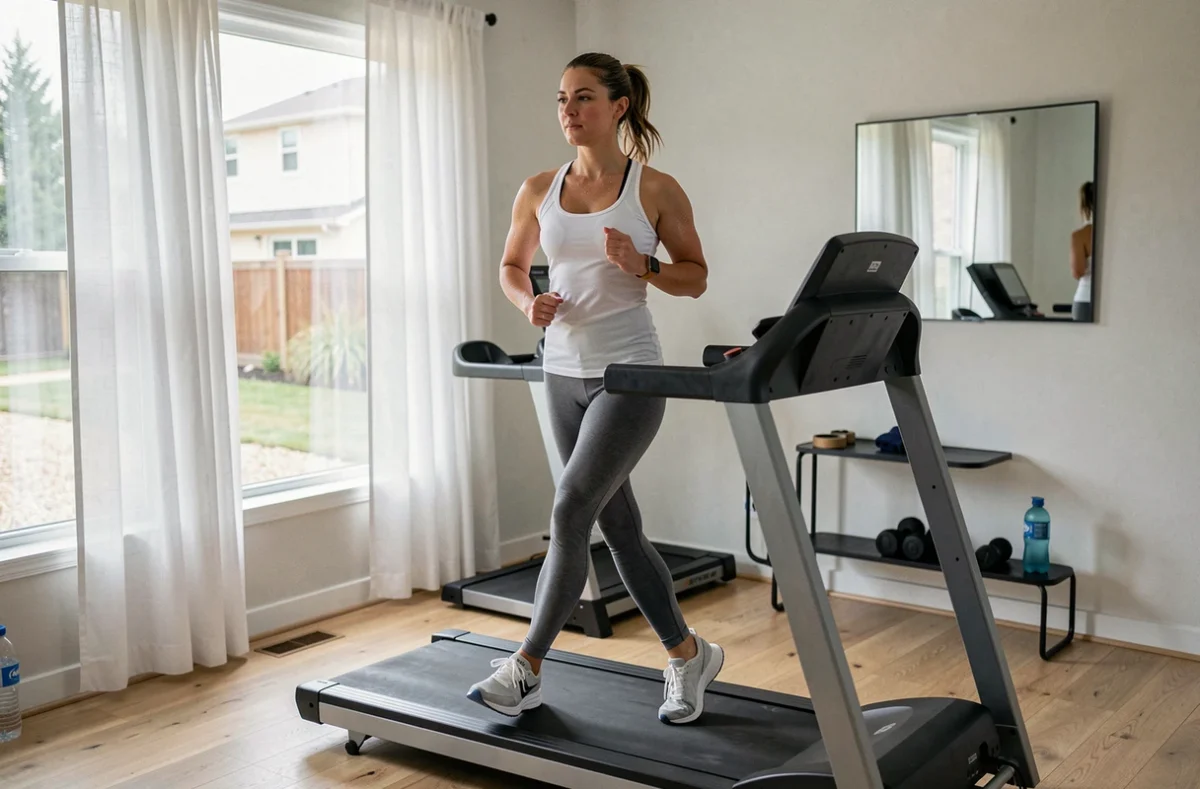
On a treadmill, the noise transmitted to neighbors comes from impacts on the ground, not from the motor. A silent motor does not solve anything if the chassis vibrates with every step. The rigidity of the frame, the quality of the cushioning, and the flooring under the machine determine the actual noise level much more than the decibels announced by the manufacturer.
We recommend checking three points before any purchase intended for an apartment building. The cushioning system must absorb shocks without excessive rebound (too soft cushioning also degrades running biomechanics). The treadmill should rest on an anti-vibration support, such as a dense rubber mat, placed between the machine and the floor. The running technique itself matters: a heel strike generates a peak impact significantly higher than a mid-foot strike.
Comparisons on tapis-course.net allow you to cross-reference user feedback on actual noise levels, a parameter rarely measured independently.
Compatibility with a residence is not limited to noise. The rear space, often overlooked, must leave a sufficient safety margin behind the belt to avoid any risk of falling against a wall or furniture. A folding treadmill reduces clutter when not in use, but this space constraint remains the same whether the machine folds or not.
Treadmill belt maintenance: a selection criterion as decisive as power
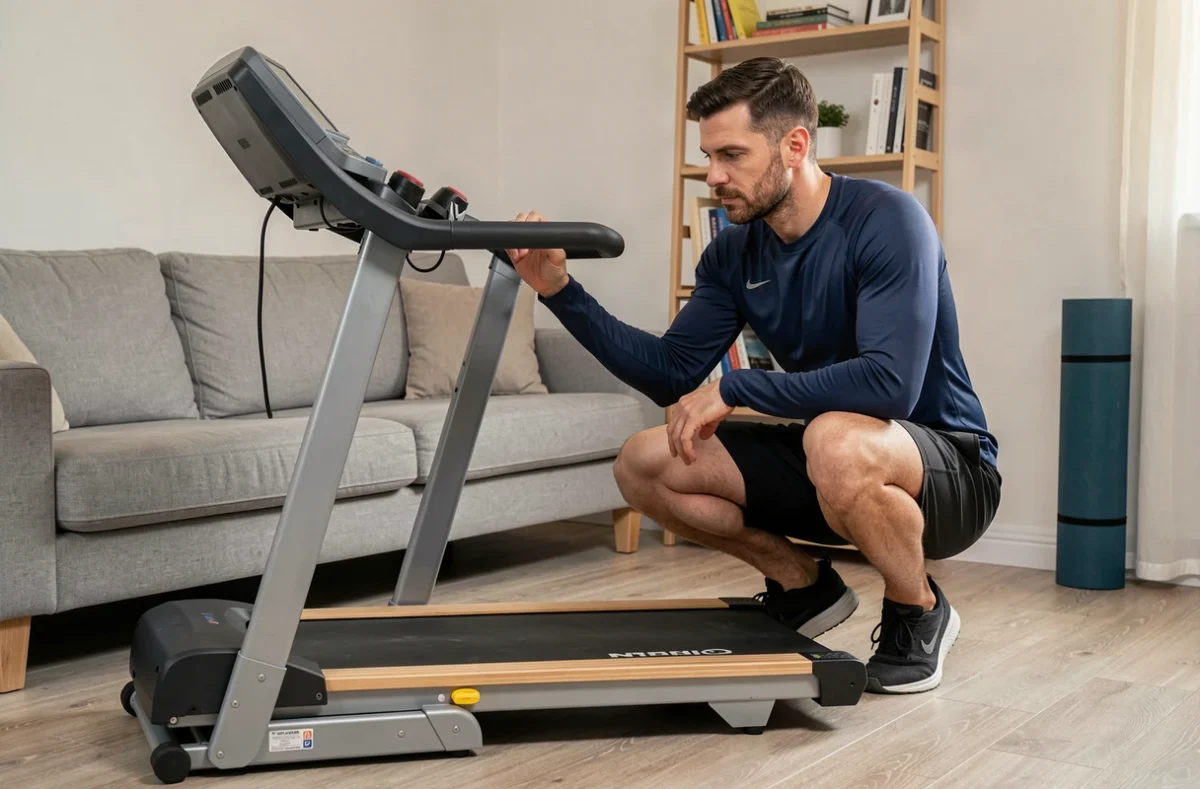
The longevity of a treadmill directly depends on the maintenance of its belt. A poorly lubricated belt strains the motor, increases electricity consumption, and accelerates wear on the deck. Before purchasing, several concrete elements should be checked that are almost never mentioned in consumer guides.
- The accessibility of the belt for lubrication: some models require partial disassembly, while others have a simple side injection system
- The type of lubricant authorized by the manufacturer: an unsuitable silicone can degrade the belt or void the warranty
- The availability of spare parts (belt, deck, rollers) from the manufacturer or a network of repairers in France
A machine whose belt is easily replaceable and whose consumables remain available for several years after purchase represents a more rational investment than a powerful model that is closed off in terms of maintenance.
Lubrication frequency and signs of wear
The lubrication frequency varies depending on usage intensity. A regular runner should check the belt’s slip every few weeks. When the belt starts to slip or the motor heats up more quickly, lubrication is overdue.
A worn deck is detected by the appearance of smooth or rough areas under the belt. Replacing the deck is cheaper than replacing the motor, but it assumes that the part is still available in the manufacturer’s catalog.
Electric consumption and standby of connected treadmills
Connected treadmills, equipped with Wi-Fi, touch screens, and subscriptions to training platforms, consume electricity even when turned off. The European regulation on standby consumption also applies to connected sports equipment. Over a year, the standby consumption of a connected treadmill can represent a significant cost if the device remains plugged in permanently.
Before purchasing, we advise checking if the standby mode can actually be disabled and if the device has a physical switch that cuts off all power. Some models require a permanent connection to maintain software updates or user data, which prevents any shutdown without loss of functionality.
Usage class and running surface: the two lines to read first
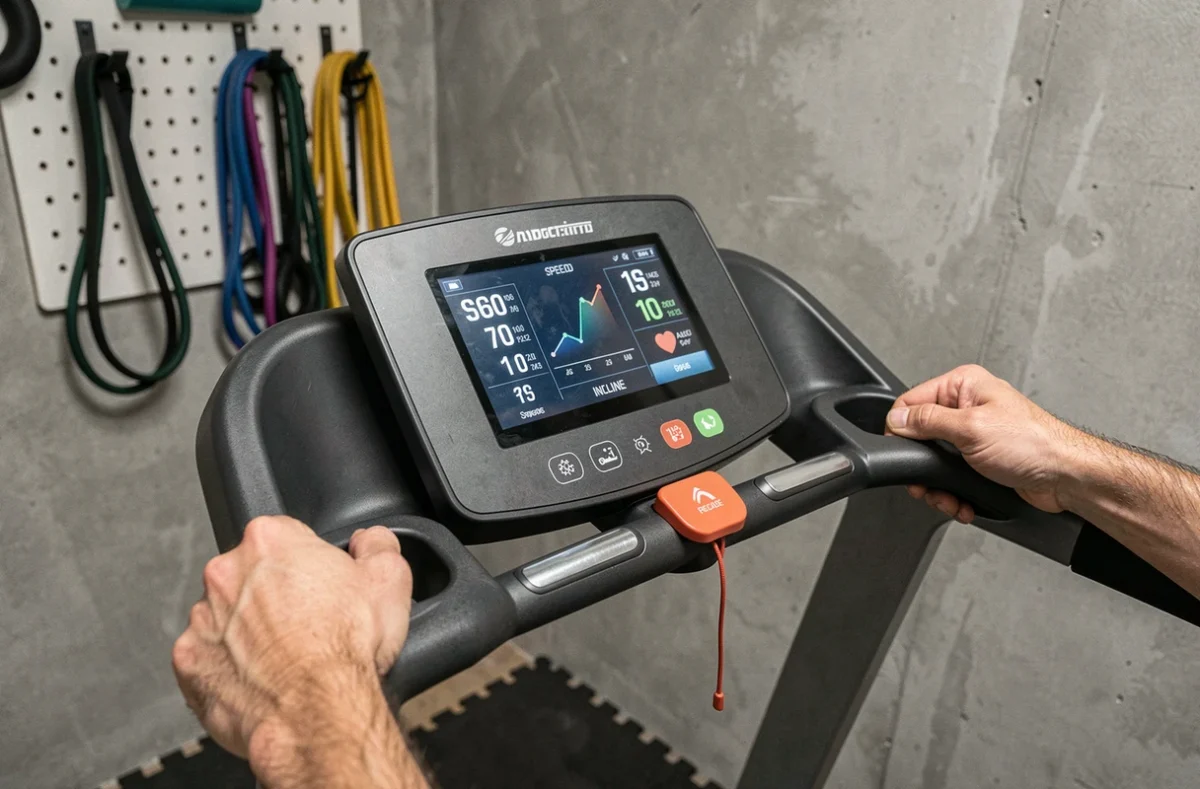
Choosing a treadmill whose usage class matches your actual training volume protects the motor, the belt, and the chassis over time. An undersized machine relative to the frequency of use will wear out much faster than a model designed to withstand the expected number of weekly hours.
The running surface determines comfort and safety. The belt should exceed the stride length and leave a sufficient lateral margin to avoid stepping on the edges. A tall runner or one with a long stride needs a belt significantly longer than the minimum dimensions often recommended.
Maximum user weight: mandatory safety margin
The maximum user weight indicated on the technical sheet is not an absolute ceiling; it is a design threshold. Choosing a machine with a margin of at least twenty percent above your actual weight improves chassis stability and reduces mechanical wear. A user weighing 80 kg should aim for a treadmill supporting at least 95 to 100 kg.
- Usage class suitable for the actual weekly training volume
- Belt surface longer than the stride length, with comfortable lateral margin
- Maximum user weight chosen with a significant margin above the actual weight
- Confirmed availability of spare parts and after-sales service in France
Motor power, often highlighted as the main criterion, does not classify treadmills on its own. A well-sized motor for its usage class is sufficient. An overpowered motor on a fragile chassis or a low-quality belt will not compensate for noise, premature wear, or lack of comfort during training. The most reliable choice remains one that combines usage class, surface, maintainability, and the actual installation conditions in your home.