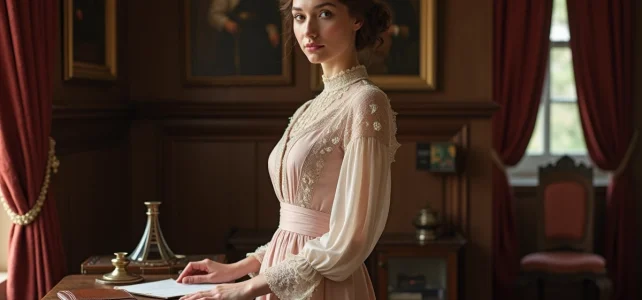
In the early 1910s, women were still wearing rigid corsets inherited from the Belle Époque. The “S” silhouette, with its projected bust and arched hips, had dominated wardrobes for over a decade. Yet, within a few seasons, lines softened, fabrics became fluid, and the female body gained unprecedented freedom of movement.
Pre-war tensions and practical silhouettes: what 1910s fashion owes to everyday life
Analyses of Edwardian fashion often focus on the aesthetics of dresses by Parisian couturiers. They overlook a more down-to-earth driver of change: the constraints of daily life between 1910 and 1914.
Related reading : Discover the latest fashion and accessory trends to enhance your style
Even before the outbreak of war, middle-class women held positions in post offices, department stores, and workshops. Traveling by tram, climbing stairs, or typing with a rigid corset and a constricting skirt was a physical feat. Fashion followed this concrete need.
Skirts were slightly shortened, revealing the ankle. Waistlines rose under the bust, freeing the abdomen. The bra began to replace the corset for active women, long before the war made this choice systematic. To delve into the fashion trends of the 1910s, one must look at both daily gestures and Parisian runways.
You may also like : The latest fashion trends not to miss to refresh your wardrobe
Practicality preceded aesthetics in the evolution of silhouettes. Couturiers formalized a movement that women had already initiated out of necessity.
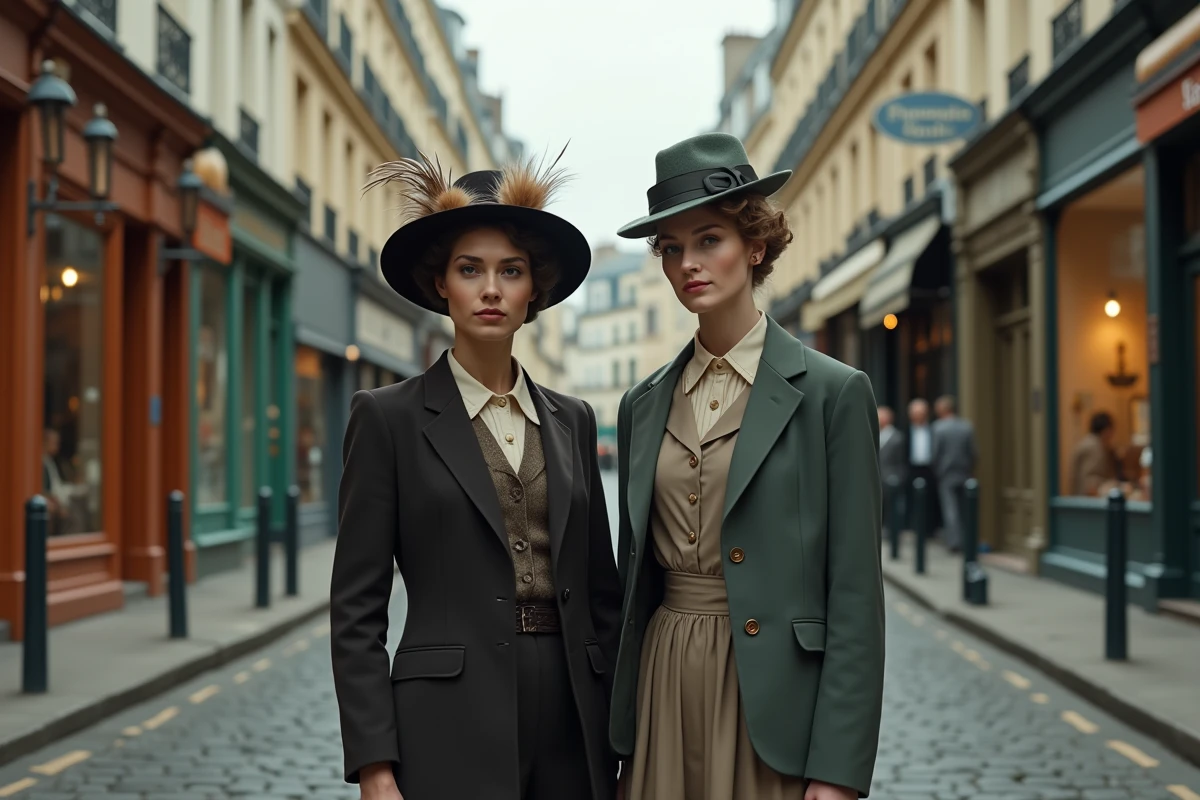
Paul Poiret and Madeleine Vionnet: two visions of a liberated body in Paris
Have you ever noticed that 1910s fashion is consistently associated with two names? Paul Poiret and Madeleine Vionnet embodied two complementary approaches to the liberation of the female body, both rooted in Parisian haute couture.
Poiret and the straight, Orientalist line
Paul Poiret eliminated the corset from his creations at the beginning of the decade. He replaced the S silhouette with a high, straight line inspired by Japanese kimonos and Oriental caftans. His dresses fell from the shoulders, without attempting to cinch the waist.
This choice was not purely decorative. Poiret’s fluid fabrics allowed for a range of movement that the corset prohibited. Bright colors (orange, turquoise, purple) and floral patterns inspired by Art Nouveau contrasted with the pastel shades of the Belle Époque.
Vionnet and the bias cut
Madeleine Vionnet worked with fabric differently. Her bias-cut technique hugged the body without constraining it. Where Poiret draped, Vionnet sculpted directly on a mannequin, creating dresses that followed natural curves.
The two approaches shared a principle: the garment adapts to the body, not the other way around. This idea, commonplace today, represented a clear break from the corset logic that reshaped the silhouette.
Art Nouveau, floral patterns, and Oriental influences in 1910s fashion
The aesthetics of the 1910s drew from two distinct visual sources that intersected on Parisian fabrics.
- Art Nouveau patterns, with their stylized garlands and organic lines inspired by nature, adorned day dresses. Plant curves replaced the strict geometries of the previous century.
- Oriental and ancient influences, brought back by colonial exhibitions and the Russian Ballets, introduced embroidery, turbans, and draping borrowed from Greek antiquity or Asia.
- Floral Minoan patterns, stemming from the rediscovery of Cretan art, briefly inspired some embellishments before giving way to the angular geometries of Art Deco by the end of the decade.
This stylistic transition, from Art Nouveau curves to Art Deco angles, did not happen overnight. The 1910s represent an aesthetic hinge between two major movements. Parisian collections from before 1914 showcase pieces where both influences coexist on the same garment.
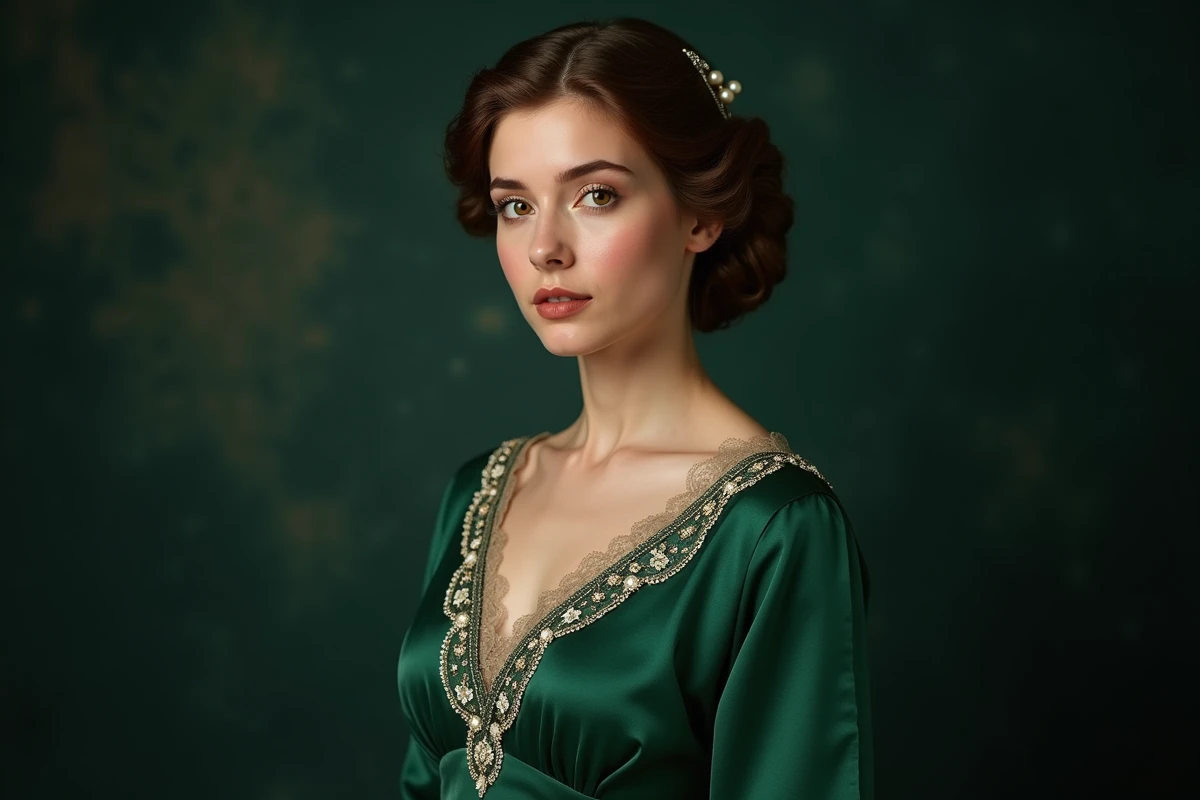
War rupture and acceleration of fashion changes
World War I did not create the trends of the 1910s from scratch. It accelerated ongoing evolutions and made irreversible choices that were still marginal.
With the mobilization of men, women took on roles in factories, transportation, and public services. Skirts were shortened further, rising above the ankle to allow for walking and working without hindrance. Heavy fabrics (satin, velvet) receded in favor of lighter, less expensive materials, as textile resources were rationed.
The corset virtually disappeared from everyday wardrobes during the war. Women who had tasted freedom of movement did not go back after 1918. This shift partly explains the rapid emergence of 1920s fashion, with its straight dresses and low waistlines.
Men’s fashion was also affected. Suits were simplified, military cuts influenced civilian overcoats, and uniforms standardized a certain sobriety that persisted in the interwar period.
Legacy of the 1910s in contemporary style
Several elements born in the 1910s remain visible in current fashion. Vionnet’s bias cut is still used for evening gowns. Empire waistlines, popularized by Poiret, regularly reappear in ready-to-wear collections.
- The principle of clothing that hugs the body without constraining it, formulated in Paris between 1910 and 1914, remains the foundation of modern clothing design.
- Art Nouveau patterns, with their plant curves, still inspire prints in seasonal collections.
- The abandonment of the corset in favor of the bra redefined lingerie for the entire century.
The 1910s did not just produce beautiful dresses for the pages of history magazines. They laid the groundwork for a relationship with the body and clothing that still structures fashion in France and beyond. The decade remains a turning point, halfway between the rigidity of the Belle Époque and the claimed freedom of the Roaring Twenties.