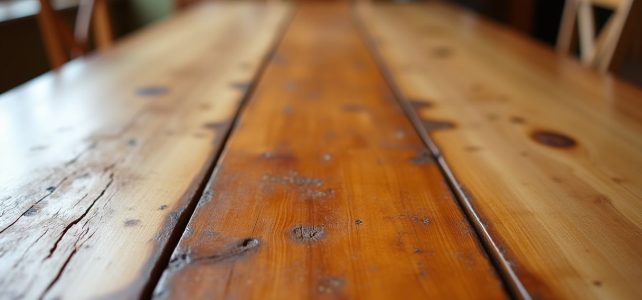
With its unmatched brilliance and ability to enhance the appearance of wood, wood varnish is much more than just a finishing product. It is an essential ally for anyone looking to not only beautify their furniture but also protect it from the ravages of time. Its application requires a certain know-how, as each type of wood and each use requires specific characteristics that only an appropriate varnish can provide. Whether you are an enlightened amateur or a professional, understanding the subtleties of wood varnish will allow you to transform a simple piece of furniture into a true work of art.
The different types of wood varnish
There are a multitude of wood varnishes, each possessing its own properties. Knowing these varieties is essential for choosing the one that will best suit your project.
- Polyurethane varnish: renowned for its exceptional resistance, it is frequently used for surfaces subject to heavy use. It offers long-lasting protection against scratches and stains.
- Acrylic varnish: more eco-friendly, this type of varnish is appreciated for its low VOC emissions. It is perfect for indoor furniture, providing a clear and bright finish.
- Shellac varnish: traditional and natural, this varnish is used for antique furniture. It enhances the wood grain while giving it a warm shine.
- Marine varnish: ideal for outdoor woodwork, it withstands the elements and humidity, thus preserving your outdoor projects against the elements.
Applying wood varnish: key steps
Applying a wood varnish is a process that requires patience and precision. Proper preparation is essential to ensure an optimal result.
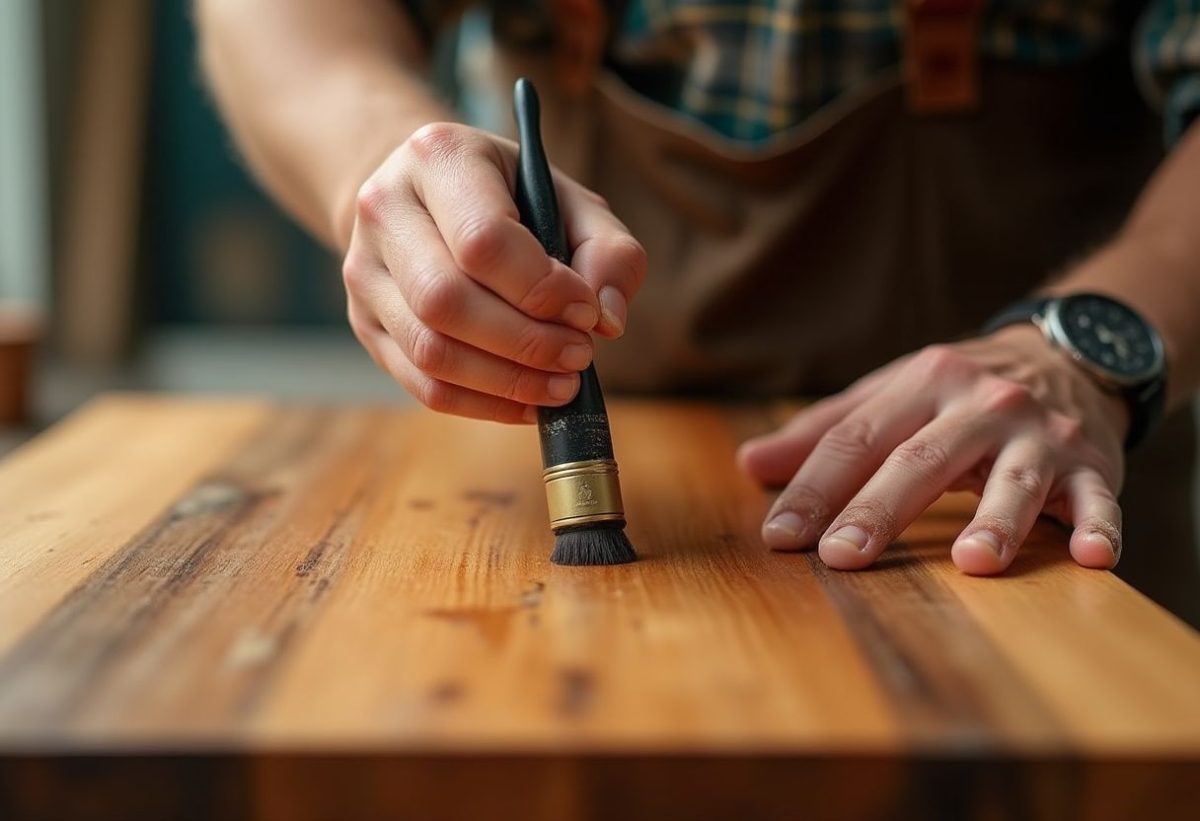
Before application, it is crucial to prepare the surface. This involves carefully sanding the wood to eliminate irregularities and achieve a smooth surface. Then, thorough dusting ensures that the surface is free of particles that could compromise the varnish’s adhesion. During application, using a quality brush or an appropriate roller allows for an even coat. Several thin layers are preferable to a single thick layer, with each layer needing to be carefully sanded once dry to maximize the adhesion of the next.
The benefits of wood varnish
Choosing to use wood varnish for your projects offers numerous advantages that justify its widespread use.
- Protection: varnish forms a protective barrier against scratches, moisture, and stains. This ensures the longevity of your furniture and its resistance to external aggressions.
- Aesthetics: it amplifies the natural beauty of the wood, accentuating its grain and hues. Varnish provides a smooth finish that enhances the wood’s shine, whether it is matte, satin, or glossy.
- Ease of maintenance: varnished surfaces are easier to clean, allowing you to maintain their shine with less effort.
Common mistakes to avoid when using wood varnish
It is common to make certain mistakes when applying wood varnish, which can harm the final result. Avoiding these ensures a perfect finish.
Haste is the enemy of good work. Allowing the varnish time to dry between coats is essential to avoid imperfections. Choosing an inappropriate type of varnish for the wood or intended use can also compromise the result. Finally, applying varnish in a dusty or humid environment risks causing visible defects on the finished surface.
Wood varnish is a versatile and effective product that, when used properly, transforms and protects your furniture by combining tradition and modernity. Each project then becomes a unique and durable work of art, revealing the natural beauty of the wood it enhances. By taking the time to select the appropriate varnish and follow the necessary steps for its application, you ensure your surfaces unparalleled longevity and aesthetics.