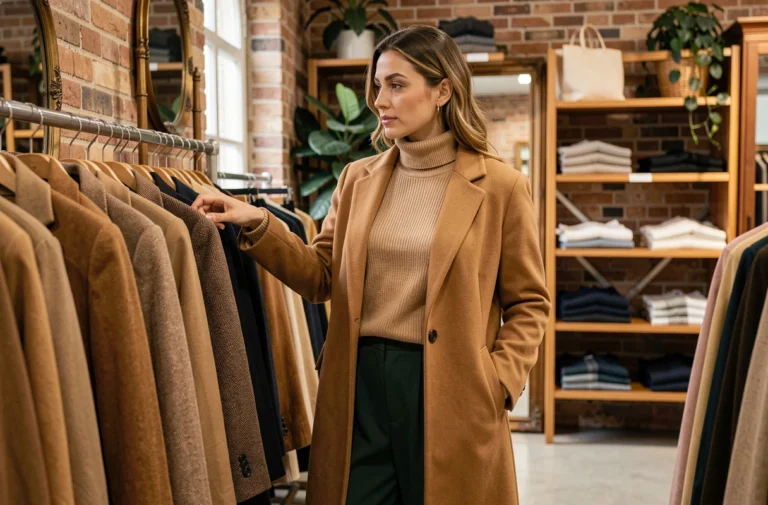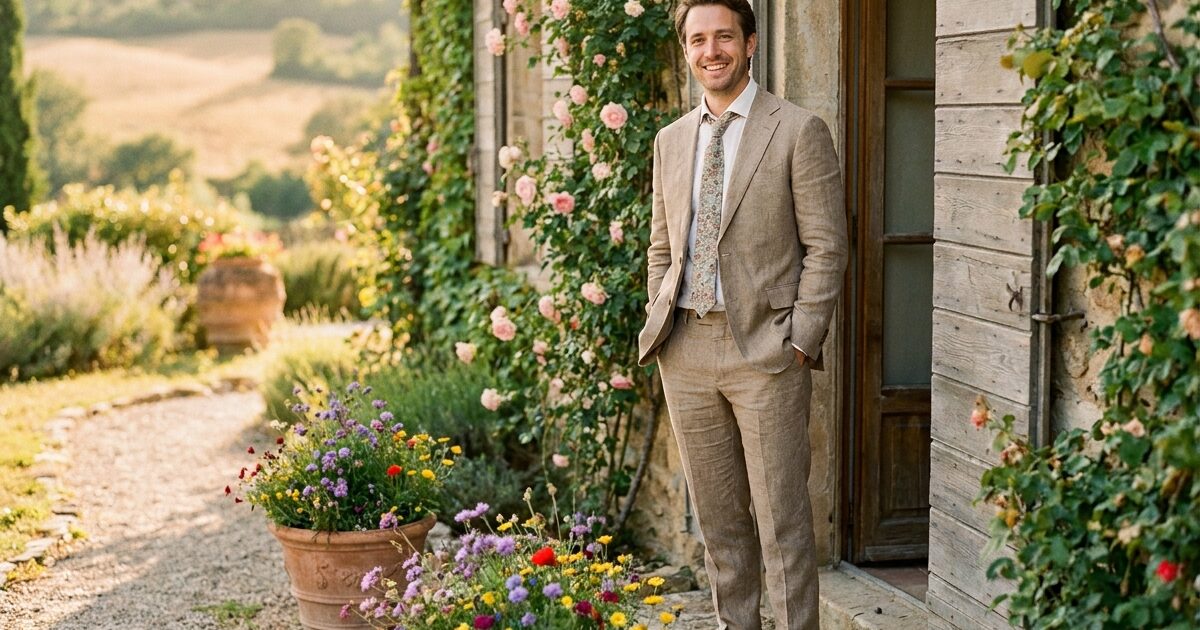
The masculine country outfit is judged on film, not on a hanger. What an outdoor wedding album reveals is how a fabric reacts to the low light of late afternoon, how a color interacts with a floral setting, and how a silhouette holds its line during a hug or a dance. Analyzing photos from country weddings allows us to identify the clothing choices that truly work, far from generic advice about beige suits.
Fabric texture and photographic rendering in natural light
A smooth suit made of synthetic fabric or very fine wool produces shiny patches in outdoor photos. In strong light, these surfaces reflect without nuance and give an appearance that photographers describe as “plastic.” This is the first visible lesson from country wedding shots.
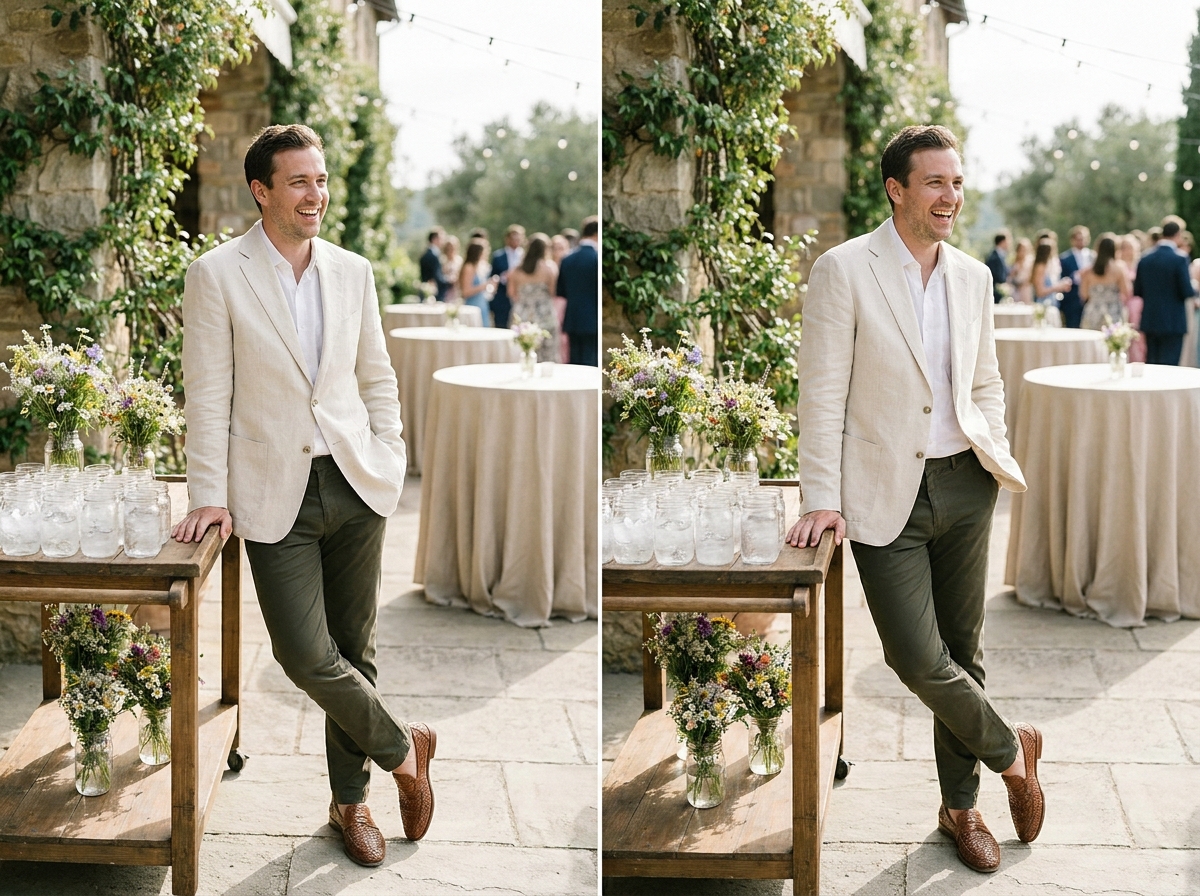
Textured materials catch the light and create depth in the image. Linen, hopsack, seersucker, or open blends produce micro-shadows on each fiber. In a photo, this translates to a lively, organic surface that integrates naturally into a setting of wood, stone, or greenery.
The most successful outfits in photos share a common point: a fabric whose texture is visible to the naked eye. Slightly wrinkled linen, for example, poses no photographic issues. On the contrary, it adds character to the silhouette and avoids the “catalog” effect of an overly polished suit.
The choice of a knitted tie in cotton or linen rather than shiny silk follows exactly the same logic: favoring matte and grainy textures.
Country color palette for men: what outdoor light transforms
Off-white, light beige, and very pale sand are common choices for a country wedding. On a hanger, they seem perfect. In a photo taken in full sun between noon and three o’clock, they lose all depth. Very light shades are overexposed in direct light and the silhouette blends into the sky or white tablecloths.
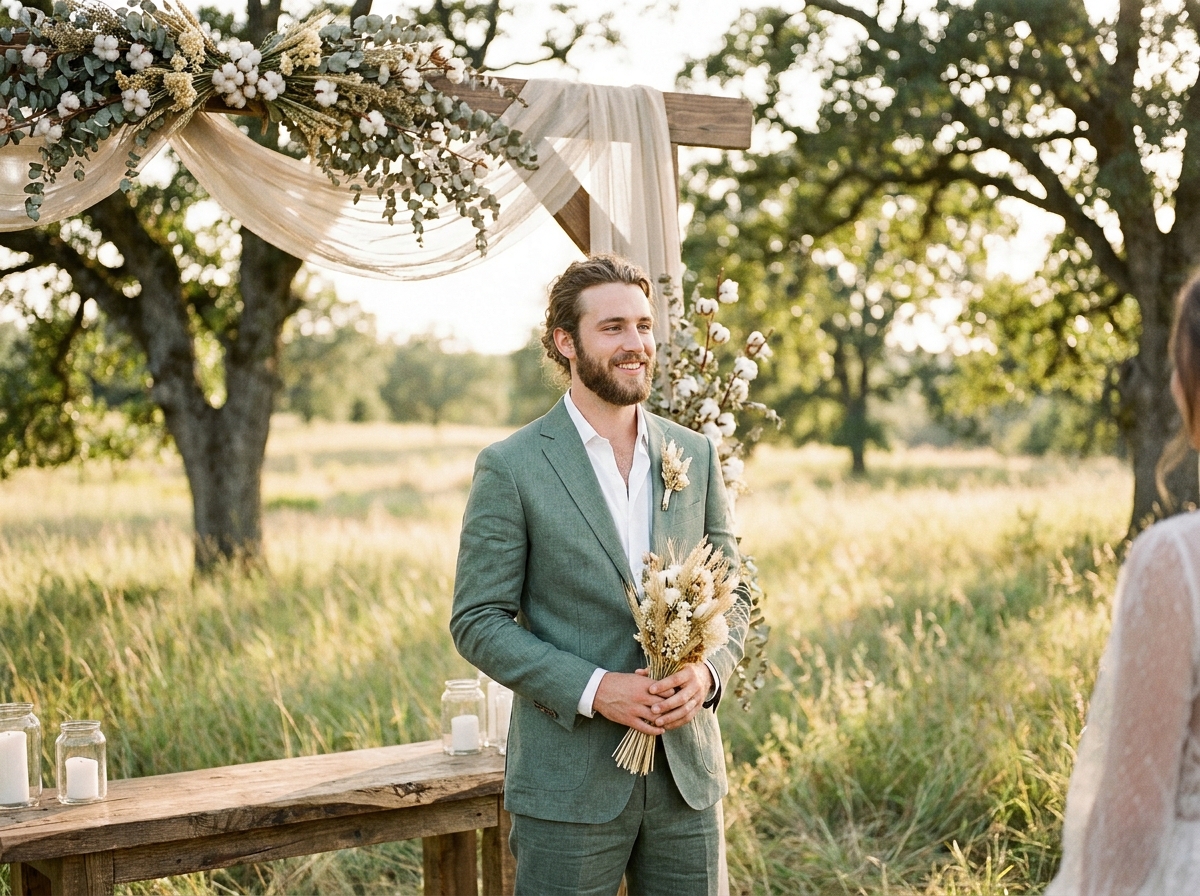
The palettes that hold up best in outdoor wedding images are those that maintain depth without absorbing all the light. Sage, stone gray, pale blue, and soft terracotta offer this compromise. They remain consistent with a country floral decoration without disappearing into the background.
One point to check: the outfit does not need to exactly match the colors of the decoration. A complementary shade to the floral palette appears more natural than an overly literal match. A groom in sage among old roses creates a soft contrast. A groom in powder pink matching the bouquets gives a saturated and monotonous image.
The trap of the all-light look in couple photo sessions
Couple photo sessions at the end of the day (golden hour) are the most flattering. The warm, low light naturally warms the tones. An entirely light suit then loses its internal contrasts: the folds, seams, and structure of the jacket become invisible. The photographer must compensate in post-production, which doesn’t always work.
A pair of pants slightly darker than the jacket, or a structured jacket worn over a textured shirt, maintains readable lines regardless of the light.
Comfort in movement: what candid photos reveal
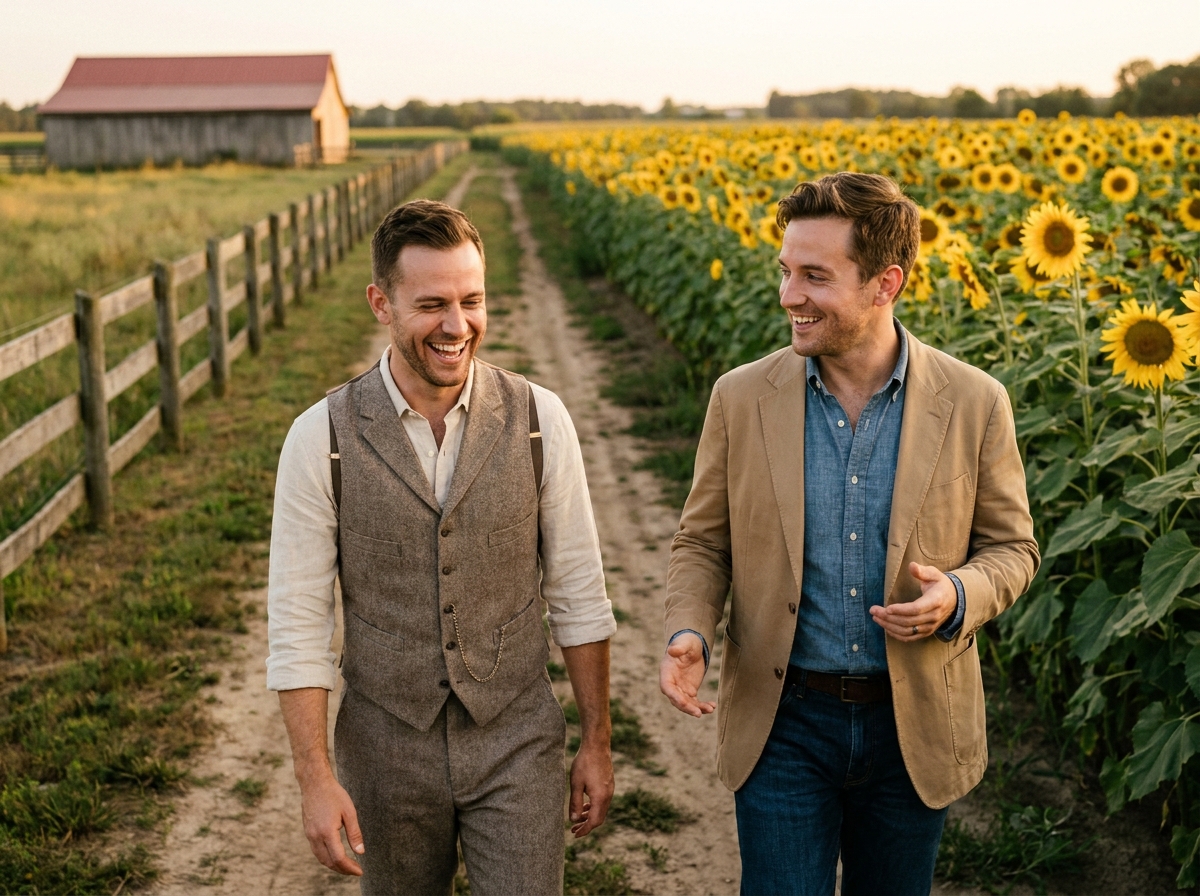
Country wedding albums contain a majority of documentary photos: hugs, walking in the grass, dancing, sitting moments during the ceremony or reception. A suit tested only standing in front of a mirror is not enough.
Visible issues in candid shots fall into a few recurring categories:
- The jacket pulling at the shoulders during a hug, creating unsightly folds in the back visible in all group photos
- The pants riding up excessively when sitting, exposing the sock above the ankle in ceremony photos
- The shirt coming out of the pants after a dance, breaking the silhouette line in evening photos
- Shoes with smooth soles that alter posture on soft ground (grass, gravel), giving a stiff gait captured by the photographer
It is preferable to try the complete outfit by simulating these situations: sitting, raising arms, walking on a soft surface. Suede loafers or soft-soled derbies adapt better to country reception terrains than a polished oxford with a rigid sole.
Men’s accessories for country weddings: dosage and visual coherence
In group photos, accessories are the elements that differentiate male silhouettes. When all the men wear suits in the same tones, it is the details that create each person’s visual identity.
One accessory per body area is enough to be readable in photos. A floral boutonniere, a textured bow tie, or visible suspenders: choosing only one distinctive element per area (neck, chest, waist) avoids accumulation that muddles the reading of the silhouette in the shots.
Very structured pocket squares, folded to a sharp point, create a mismatch with the country spirit. A crumpled pocket square casually placed in the breast pocket, in a matte fabric (linen, cotton), fits better with the relaxed vibe of an outdoor wedding.
The case of the waistcoat without a jacket
The waistcoat worn without a jacket is a common option at country weddings, especially in summer. In photos, it structures the silhouette while keeping an informal tone. The condition: that the waistcoat is fitted and that the shirt underneath remains impeccable throughout the day. Without the jacket to hide any creases, every flaw in the shirt becomes visible.
The final detail that country wedding photos highlight concerns the overall coherence between the groom and his witnesses. The most visually successful groups do not wear identical outfits, but share a common palette and a uniform level of formality. A witness in a classic dark suit next to a groom in deconstructed linen creates an imbalance that each group photo amplifies.